
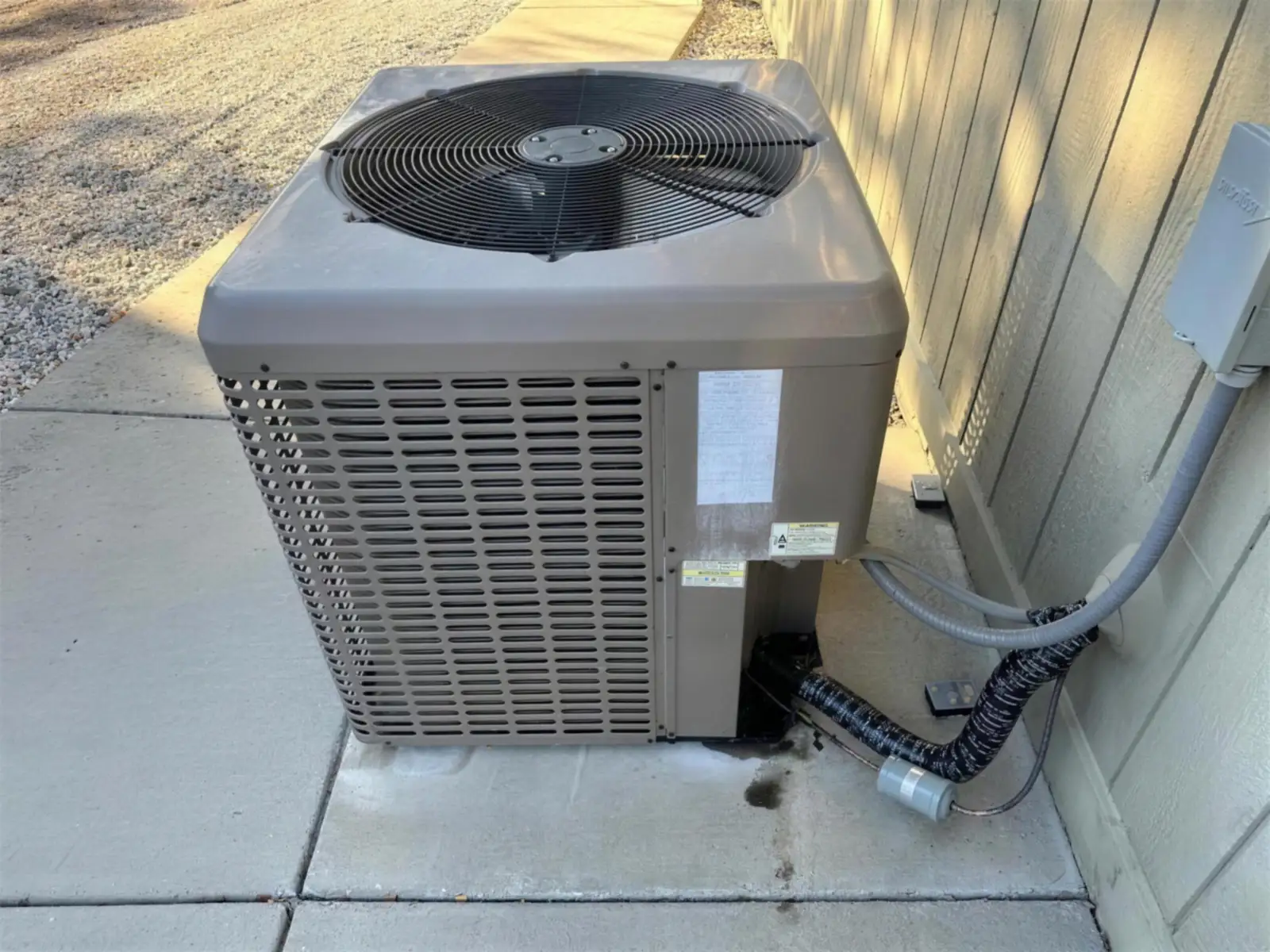
Thermostat Repair in Redding, CA
Apex repairs thermostats and the control wiring behind them for homes in Redding, CA and nearby towns. When the screen goes blank, the reading is wrong, or the furnace or air conditioner ignores what you set, we find out whether the fault is the thermostat, its wiring or the equipment, and fix that.
A thermostat problem in Redding rarely waits for a mild week: it shows up when the house is cold at dawn or hot by noon. Many of these calls end with a small, quick fix, and the rest end with a clear answer about what failed. Call (530) 972-2739 to book a visit.
Thermostat Problems We Fix
- Blank or flickering thermostat screens
- Readings that do not match the room
- A system that will not start, or will not shut off
- Heat when you asked for cooling, or the reverse, on a heat pump
- Short cycling caused by thermostat placement or settings
- Loose, chafed or miswired thermostat wire
- Blown control fuses and failed transformers behind a dead thermostat
- Ready for a smart or programmable model instead? See thermostat installation
The Real Cause
We test the thermostat, the wire and the control circuit, so you are not sold a new thermostat for a blown fuse.
Heat and Cooling Back
Once the call reaches the equipment again, the furnace, air conditioner or heat pump does its job.
Readings You Can Trust
A thermostat that reads the room correctly stops the house from running too warm or too cold.
Tested Before We Go
We run heating, cooling and the fan after the repair to confirm every call works.
Not sure what to budget? See what HVAC costs in Redding.
Request a Free Quote
Send your request from this page: it reaches our office marked Thermostat Repair, so we know what it is about before we call you back.
- Phone Number
- (530) 972-2739
- Email Address
- office at apexhvac.co
- Service Area
- Northern CA, Redding, Shasta County & Beyond

How a thermostat runs your heating and cooling
A home thermostat does not power your furnace or air conditioner. It works as a switch on a low voltage control circuit that the equipment supplies: a transformer in the furnace or air handler steps household power down, a small fuse protects the circuit, and the control board acts on whatever the thermostat calls for. Each wire to the thermostat carries one request, such as heat, cooling or the fan, and on a heat pump one wire also tells the reversing valve which way to run.
That layout explains most thermostat trouble. If the thermostat loses power, its screen goes blank. If one wire breaks or comes loose, the system may heat but not cool, or run the fan but never start the compressor. If the thermostat’s sensor reads the wrong temperature, the system runs on bad information. Our job is to find which link failed.
Checks to try before you call
A few checks take a minute and sometimes solve the problem. If the thermostat runs on batteries, replace them; a weak battery can blank the screen or make it lose settings. Confirm it is set to the right mode, heat or cool, and a few degrees past the room temperature. Make sure the schedule or a vacation hold is not overriding what you set.
Next, look at the breaker for the furnace or air handler and the switch beside the furnace, which looks like a light switch and is easy to bump off. Many furnaces also have a safety switch under the front panel that cuts power when the door is not seated, so check that the panel is firmly in place. If the breaker trips again after one reset, leave it off and call us.
If the screen is blank on a thermostat with no batteries, or everything above checks out and the system still does not respond, the fault is likely in the wiring, the control circuit or the equipment. That is a job for a technician.
Common thermostat faults and what fixes them
A blank screen on a wired thermostat usually means the control circuit has lost power. The cause may be a blown fuse on the furnace control board, a failed transformer or a broken wire. A blown fuse always has a reason, often a thermostat wire shorting against sheet metal or a pinched cable, so we find and fix the short as well as the fuse. Our HVAC repair page goes deeper on low voltage repair.
Wrong readings come from the thermostat’s location as often as its sensor. Afternoon sun on the wall, a supply register blowing on it, a lamp or television nearby, or a draft through the wall cavity behind it can all make the thermostat think the room is warmer or colder than it is. Sealing the hole where the wire enters the wall, or moving the thermostat to a better wall, often settles it.
A system that will not shut off may have a thermostat stuck calling, a shorted wire or a failed relay on the control board. On a heat pump that heats when you asked for cooling, the reversing valve setting in the thermostat or its wiring is a common cause, especially right after a thermostat swap. Short cycling, where the system starts and stops every few minutes, can come from a thermostat in a poor spot, but also from a dirty filter or an overheating furnace, so we check the equipment too; see furnace repair and AC repair for those faults.
When to repair the thermostat and when to replace it
Wiring, settings, fuses, transformers and dirty contacts are repairs, and the thermostat stays on the wall. A thermostat whose screen, sensor or circuit board has failed is usually replaced rather than repaired, because the replacement costs less than the labor to fix the old one.
An old dial thermostat with a mercury bulb is a special case. California banned the sale of mercury thermostats in 2006, and its Department of Toxic Substances Control says they cannot go in the household trash; each holds about 3 grams of mercury and must go to a collection location (DTSC mercury thermostats). If yours has one and is failing, we remove it intact and handle it as the state requires.
If a replacement makes sense, it can also be an upgrade. The Department of Energy says turning the thermostat back 7 to 10 degrees for 8 hours a day can save as much as 10 percent a year on heating and cooling (DOE Energy Saver Guide), which a programmable or smart model does on its own. Our thermostat installation page covers choosing one that suits your system, including the wiring a smart thermostat needs.
What a thermostat repair visit looks like
The technician starts with what you have noticed and the thermostat itself: power, settings, the wiring at the base and whether the sensor reads true against a separate thermometer. Then the circuit is metered from the thermostat to the control board, call by call, until the fault turns up. You hear what failed and what the repair involves before any work begins.
After the repair, we run the system in each mode the thermostat controls. One Apex customer described exactly this in a Google review: the thermostat problem turned out to be simple, it was diagnosed and fixed quickly, and the system was tested through its range of heat before the technician left.
If we find the equipment needs attention while we are there, such as a clogged filter or a drain line backing up, we point it out. An annual maintenance visit includes thermostat calibration and catches many of these problems before they stop the system. Buying or selling a house? Our home sale HVAC inspection covers the thermostat along with the rest of the heating and cooling.
Trip charges, hours and where we work
A repair visit has a $99 trip charge during office hours, and the trip charge is $125 after hours; parts and labor are quoted once we know the fault. First responders get 15 percent off, and our labor carries a 1-year workmanship guarantee. For sourced price ranges on bigger repairs and replacements, see the HVAC cost guide.
Our office hours are 7am to 5pm. A thermostat failure that leaves the house without heat in a freeze or without cooling in triple-digit heat counts as an emergency, and we take those calls outside office hours too; our emergency HVAC repair page explains how.
We repair thermostats in Redding and across Shasta County, south into Tehama County. You can read local notes for Shasta Lake, Anderson, Cottonwood and Red Bluff, and the service area page lists every town we travel to.
Why Redding Homeowners Call Apex for Thermostat Repair
A thermostat sits at one end of a control circuit and the equipment sits at the other, so a symptom at the wall can start anywhere along the way. Apex is a family-run, licensed HVAC company (CA LIC. #1122085), and our technicians work on the furnaces, air conditioners and heat pumps the thermostat controls, not just the box on the wall.
Thermostat First, Then the Circuit
We start with the thermostat because it is the quickest thing to rule in or out, then follow the wire to the equipment until the fault turns up.
Repair Before Replace
A loose wire, a bad setting or a blown fuse is repaired, not replaced. If the thermostat itself has failed, we tell you why and what a replacement involves.
Thermostat Repair Questions
On a battery thermostat, replace the batteries first. On a wired thermostat, a blank screen usually means the low voltage circuit has lost power: a tripped breaker, the furnace switch turned off, a furnace door not seated on its safety switch, a blown fuse on the control board, a failed transformer or a broken wire. We test each one in turn.
The sensor reads the air around it, so sun on the wall, a nearby supply vent, a lamp or television, or a draft through the wall behind it can throw it off. A worn sensor can drift as well. We compare it with a separate thermometer and fix the location or replace the thermostat.
Sometimes. A thermostat with no power or a broken wire cannot call for heat or cooling. The same symptom can come from a tripped breaker, a blown fuse, a failed control board or a problem in the furnace or outdoor unit. We check the thermostat first and then follow the circuit until we find it.
The thermostat may be stuck calling, a wire may be shorted, or a relay on the control board may have failed. A thermostat set far below or above the room temperature in extreme weather can also keep a system running. Turn the system off at the thermostat and call us if it keeps running.
If the fault is wiring, settings, a fuse or the transformer, the repair is the answer and the thermostat stays. If the thermostat itself has failed, a replacement usually costs less than trying to repair it. We tell you which situation you are in before any work starts.
The trip charge is $99 during office hours and $125 after hours. Parts and labor depend on what failed, and we quote them once we find the fault, before we start the repair. First responders get 15 percent off.
Yes. A thermostat near a supply vent or in direct sun can satisfy itself too quickly and shut the system off early. Short cycling can also come from a dirty filter or an overheating furnace, so we check the equipment as well as the thermostat.
Other services
- New HVAC Installations
- HVAC Repairs
- AC Repair
- Furnace Repair
- Emergency HVAC Repair
- HVAC Maintenance Plans
- Commercial HVAC Services
- Home Air Quality Testing
- Mini Split Installation
- Heat Pump Installation
- Insulation & Ventilation
- Duct Repair & Replacement
- Swamp Cooler Service
- Blown-In Insulation
- Whole House Fans
- Mini Split Repair & Service
- Thermostat Installation
- Home Sale HVAC Inspection
Our Commitment
Transparent Pricing
Clear, upfront estimates before we start: no hidden fees, no surprise charges once the work is underway.
Guaranteed Work
Trusted parts and materials on every job, backed by our labor guarantee.
Emergencies don’t just happen during business hours. We’re available 24/7.